How this site was madeOctober 2026
How this site was made.
I directed it. Claude Code wrote the code and the first drafts. The copy was rewritten from my own emails and notes, and every line was checked against a facts file before it shipped.
01How it got here
Fifteen rounds, thirteen prototypes, three directions
Before this site there were fifteen rounds of prototypes, October 2–11: thirteen named directions, a 3D world you scrolled through, and a film built in Blender. None of them shipped. The scroll cameras janked on my phone, the effects got ahead of the work, and they took longer than a website should.
What survived were the small moments that come out of real work: robots next to Ecrion, paint next to the KAB rebrand, lanterns next to Beirut. Then Claude Code built three directions to one brief, and I picked the Workbench.
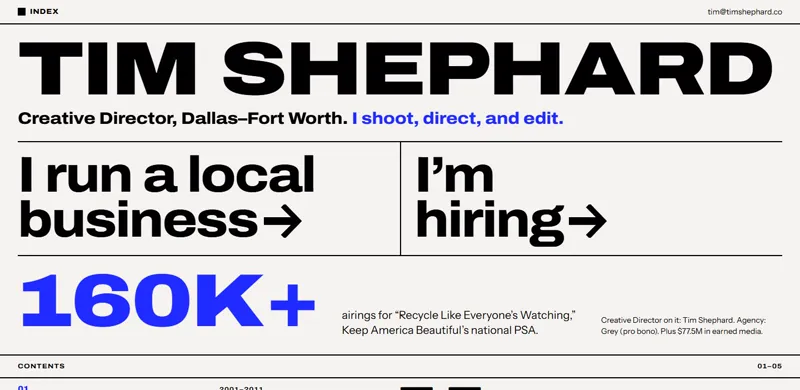
ONE, The Index Editorial. Oversized type and an index you read like a magazine. 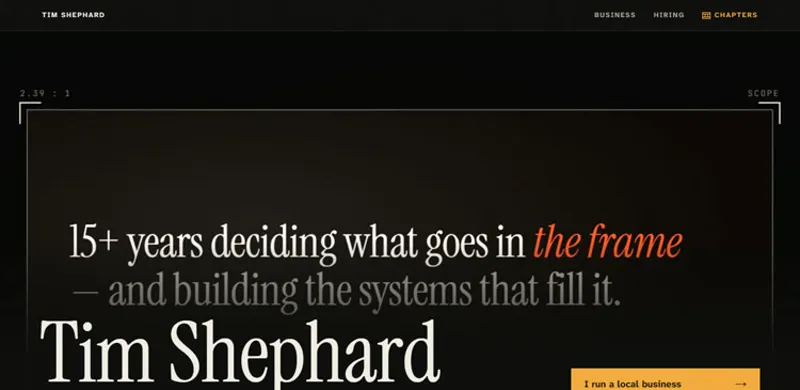
TWO, Feature Presentation Cinematic. Full-bleed frames and chapters, like a film. 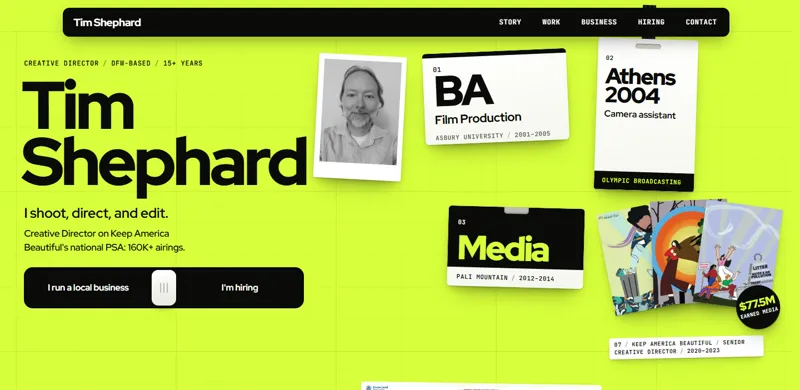
THREE, The Workbench The career as real objects on a bench you pick up. This one.
02What I did
Direction and decisions
- Wrote the brief: the site has to win work, for a local business owner and for a recruiter.
- Wrote the rules: a facts file for every claim, and who gets credit for what.
- Called every round, and picked this direction from three.
- Ruled on every figure. The Giphy figure is 4.6M+ because I ruled that only the illustrated GIFs count.
03What AI did
Claude Code (Anthropic's Claude)
- Built the prototypes and this site.
- Wrote first drafts, each marked in the source until it was rewritten.
- Went through my email, drives and old sites to inventory the work and find who did what.
- Ran the checks on every page: speed, accessibility, and the facts.
04What people did
The work was made with people
- Grey (pro bono): agency on KAB's national PSA.
- Alex Savchuk: design on the KAB rebrand.
- A student illustrator: the rebrand's line art, under my direction.
- Phil Jones: design on the Pali Mountain brochures, which I directed and edited.
- My team at DHS S&T, across video, interactive media and graphic design.
05Tools
Tools
- Astro, built to plain HTML. Every page works with JavaScript off.
- The bench is plain TypeScript: Canvas 2D for the paint, lanterns and fireflies, a small physics loop for the robots, CSS for the paper and posters.
- Design tokens in the W3C format, built with Terrazzo. Fonts: Red Hat Display and JetBrains Mono, self-hosted.
- Playwright, Lighthouse and axe to check every page; ffmpeg for the images.
06Kept and thrown away
What I kept, and what I threw away
Kept
- Real work only: the posters, the robots, the report screens, the drawings from Beirut.
- Small moments next to the work they come from, never in the way of it.
- The facts file. The build fails if a page gets my PSA role wrong (I was Creative Director on it) or uses a figure I haven't cleared.
- Plain pages that load fast and read with JavaScript off.
Thrown away
- The 3D world and the scroll camera.
- The film as the home page.
- Counters and "edition" numbers that weren't true.
- Copy that sounded like an ad for AI.
One real edit is on the home bench: pick up the ISCS memo (08) to see an AI draft line and the line that shipped. Go to the memo
07Also built
Other things I've built
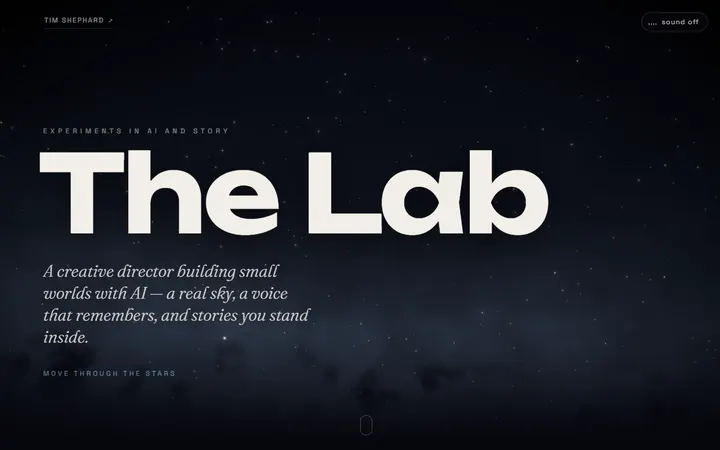 The Lab (opens in new tab)
Interactive experiments in AI and story. First up: Tonight's Sky, a real-data planetarium.
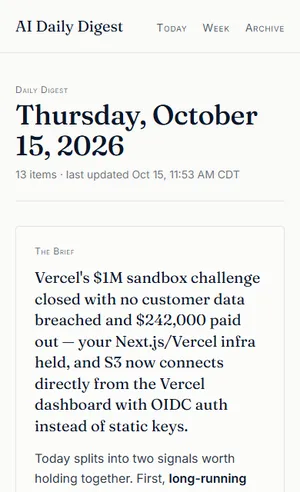 AI Daily Digest (opens in new tab)
Scores tech feeds with Claude every morning and distills them into one editorial brief.